
Why a Written Lease Matters
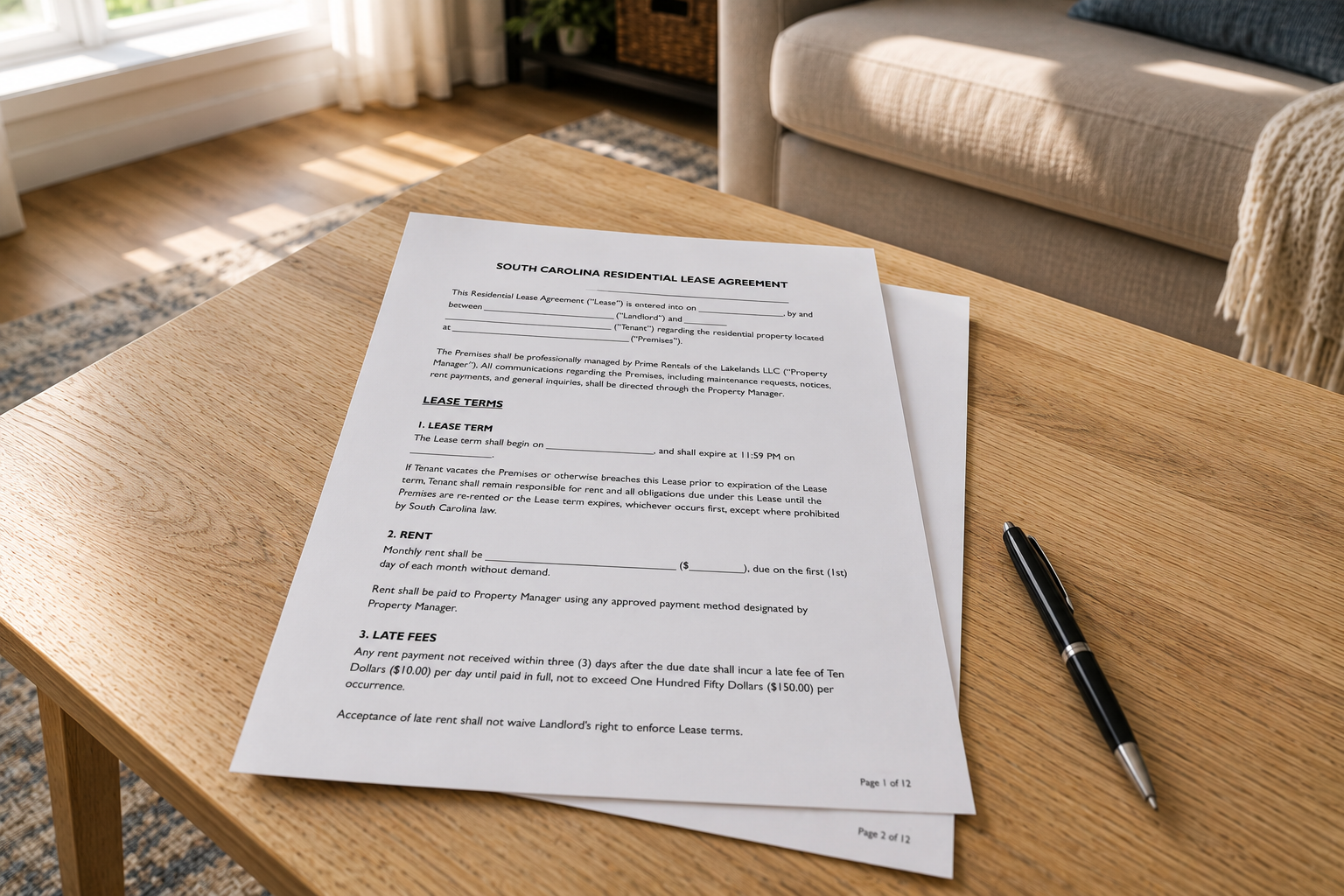
A lease agreement is the foundation of every successful rental relationship. It is much more than a document that outlines the monthly rent or lease term—it establishes the expectations, responsibilities, and protections that govern the relationship between a property owner and tenant throughout the tenancy. Taking the time to create a thorough lease before move-in helps prevent misunderstandings, provides guidance when questions arise, and creates a clear reference for both parties.
A well-written lease should explain much more than when rent is due. It should define maintenance responsibilities, occupancy limits, pet policies, property care expectations, late fees, communication procedures, and other important terms that help everyone understand their obligations from the very beginning. Addressing these topics before a tenant takes possession of the property creates a stronger foundation than trying to resolve disagreements after they occur.
Every rental property is different, and every lease should reflect the specific policies and expectations of that property. While no lease can prevent every disagreement, a clear and comprehensive agreement significantly reduces confusion, protects both parties, and establishes a consistent framework for managing the tenancy throughout the lease term.
Lease Agreements & Move-In
Clear expectations begin with a well-written lease.
Key Benefits of a Written Lease
● Clearly defines the rights and responsibilities of both parties
● Establishes expectations before move-in
● Helps prevent misunderstandings and disputes
● Documents important property policies in writing
● Creates a professional foundation for the tenancy
Defining Responsibilities & Expectations
One of the most valuable aspects of a well-written lease is its ability to clearly define the responsibilities of both the property owner and the tenant. Establishing these expectations before move-in helps prevent misunderstandings and provides a consistent point of reference throughout the tenancy. When responsibilities are clearly documented, both parties know what is expected of them from the very beginning.
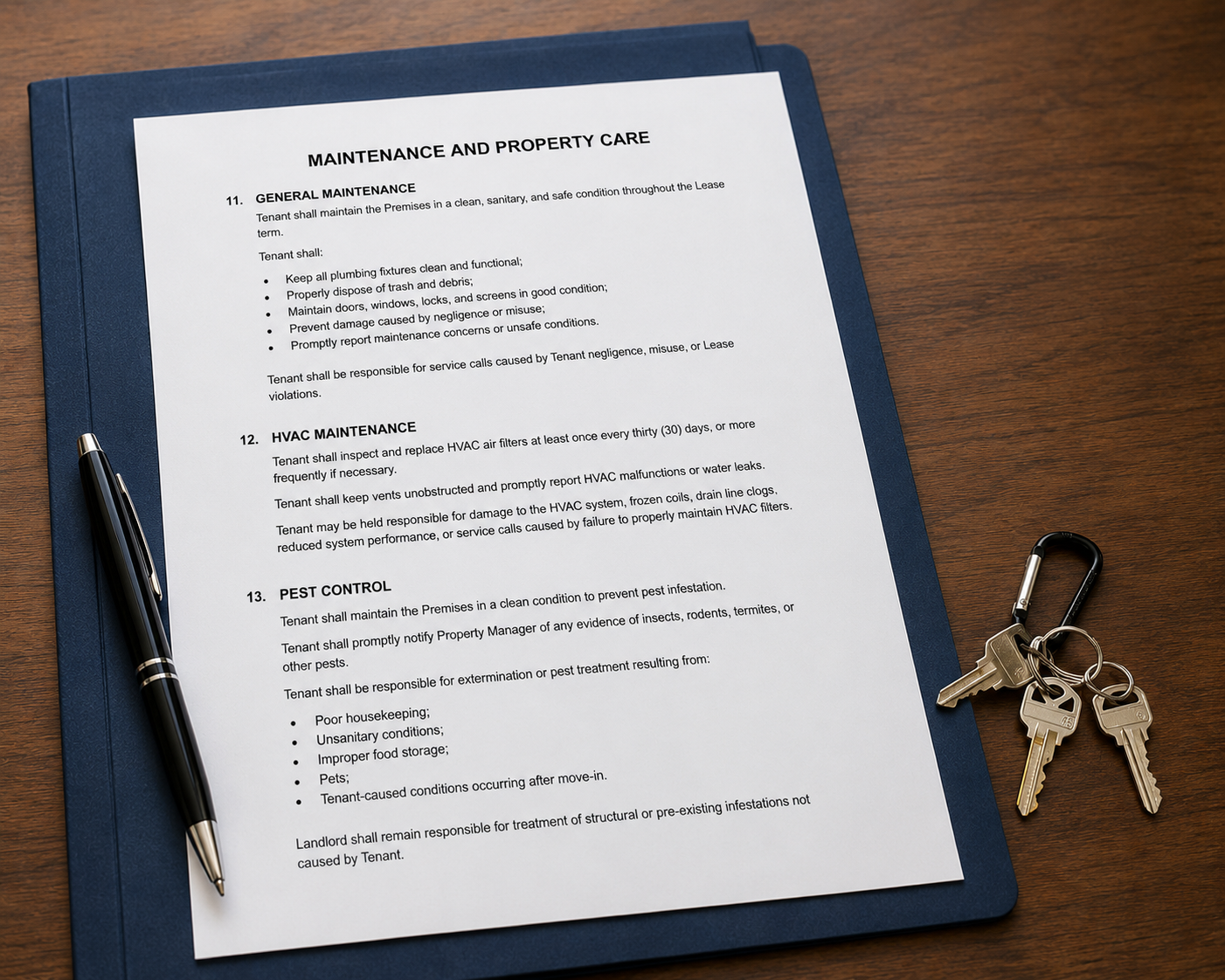
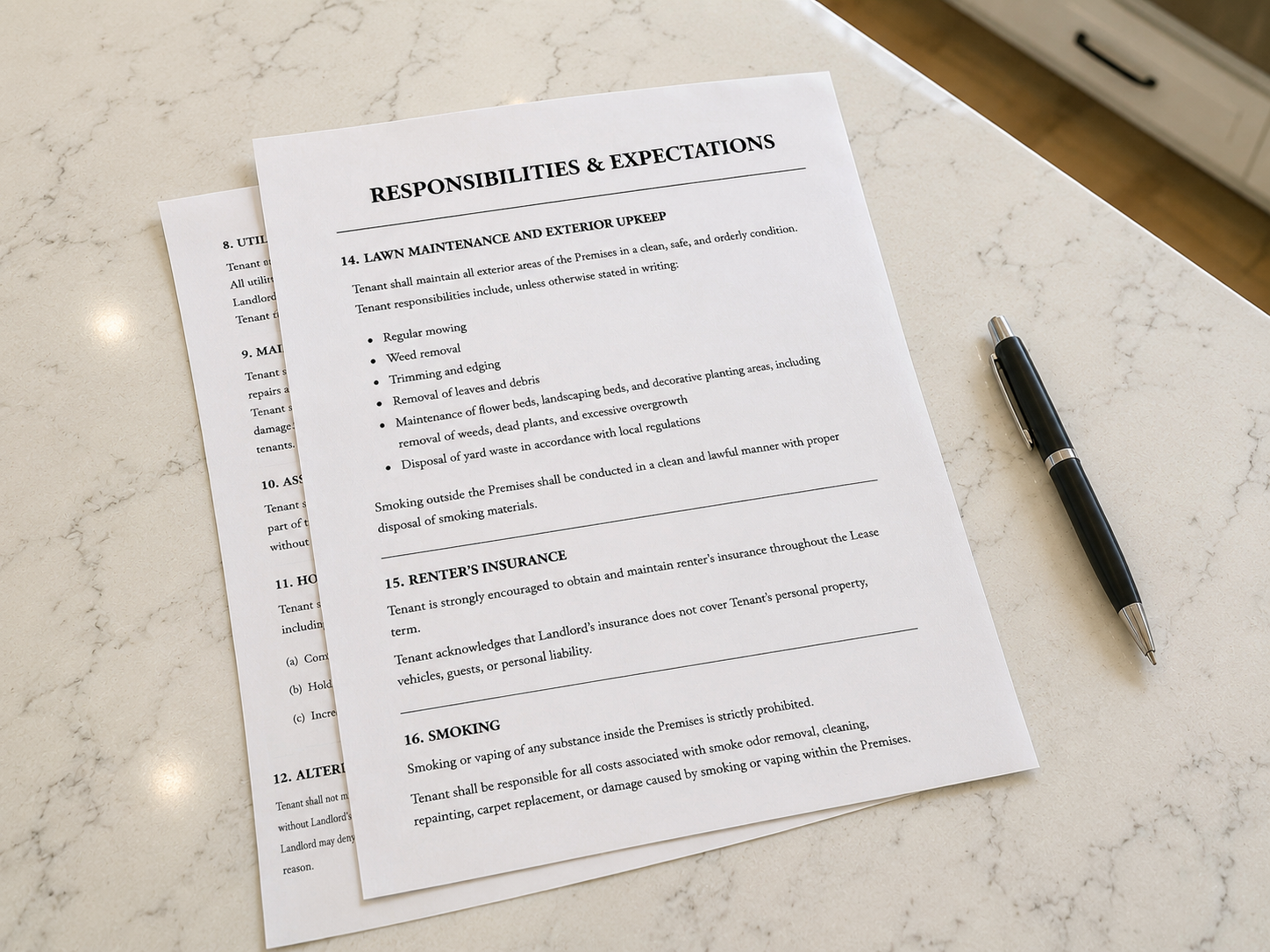
A comprehensive lease should address much more than rent payments. It should clearly outline maintenance responsibilities, property care expectations, reporting procedures for repairs, occupancy requirements, utility responsibilities, and other day-to-day obligations. Clearly defining these expectations helps reduce uncertainty and creates a more professional rental experience for everyone involved.
No lease can anticipate every situation that may arise, but taking the time to address common responsibilities in writing creates a strong foundation for resolving questions fairly and consistently. Rather than relying on assumptions or verbal conversations, both the owner and tenant can refer to the lease whenever clarification is needed.
Key Responsibility Principles
● Clearly define the responsibilities of both the owner and tenant
● Document maintenance and property care expectations
● Explain utility, occupancy, and communication requirements
● Establish consistent procedures before move-in
● Use the lease as the primary reference when questions arise
Property Policies & Lease Addenda
Every rental property has its own unique rules, expectations, and requirements. While many lease provisions remain consistent from one property to another, additional policies help address the specific needs of the property and establish clear expectations before a tenant moves in. Including these policies in writing helps reduce uncertainty and ensures everyone understands the standards that apply throughout the tenancy.
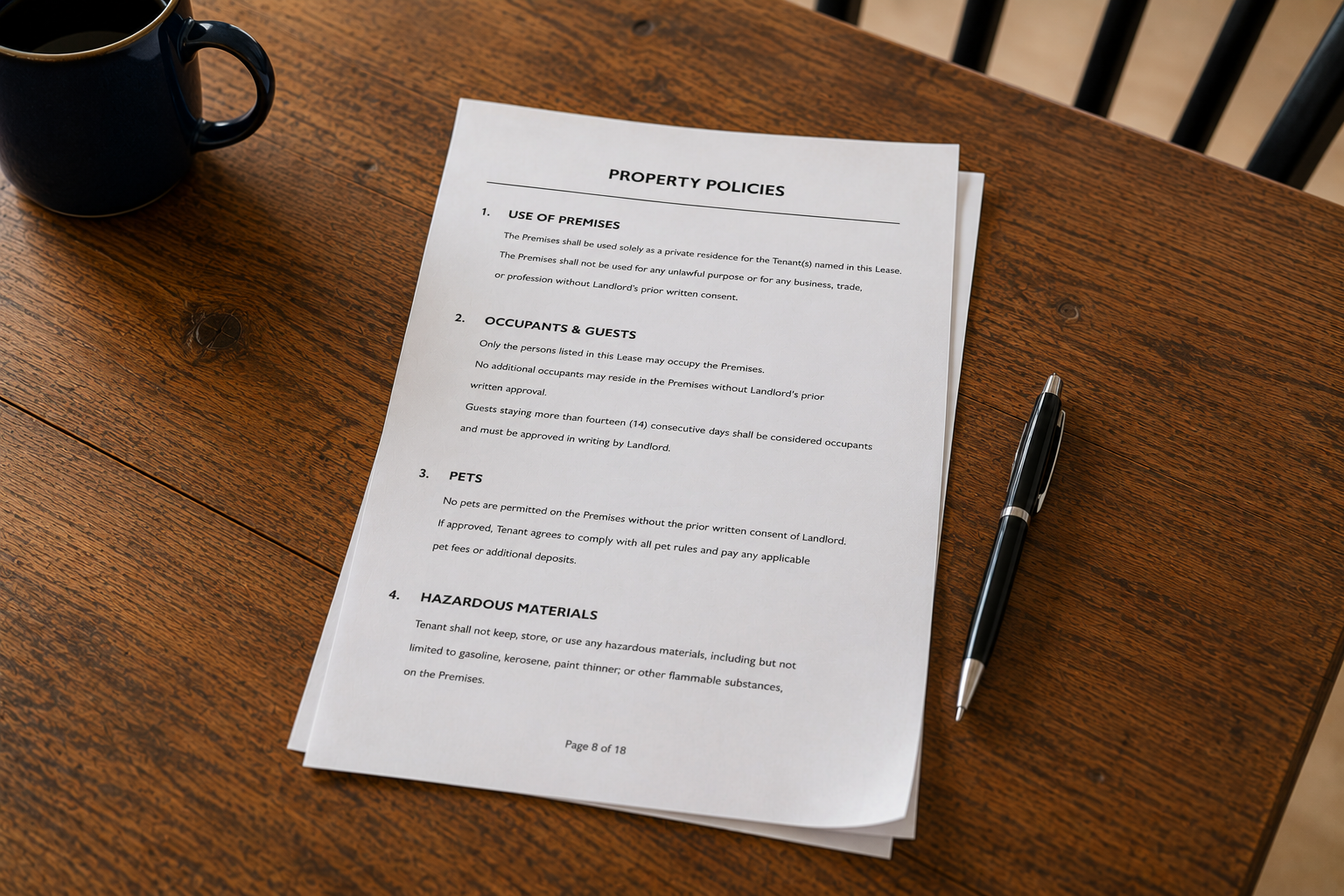
Common lease policies may address occupancy limits, guests, pets, smoking, property use, parking, homeowner association requirements, and other situations that are unique to a particular rental property. Additional lease addenda can also be used to document property-specific requirements or disclosures that may not apply to every home.
Clearly documenting these policies before move-in helps prevent misunderstandings and provides a consistent reference if questions arise later. Rather than relying on verbal conversations or assumptions, both the owner and tenant can refer to the written agreement to understand the expectations that were established from the beginning.
Key Policy Principles
● Document property-specific rules in writing
● Clearly define occupancy, guest, and pet policies
● Include additional lease addenda when appropriate
● Establish expectations before move-in
● Use written policies to reduce misunderstandings
Reviewing & Signing the Lease
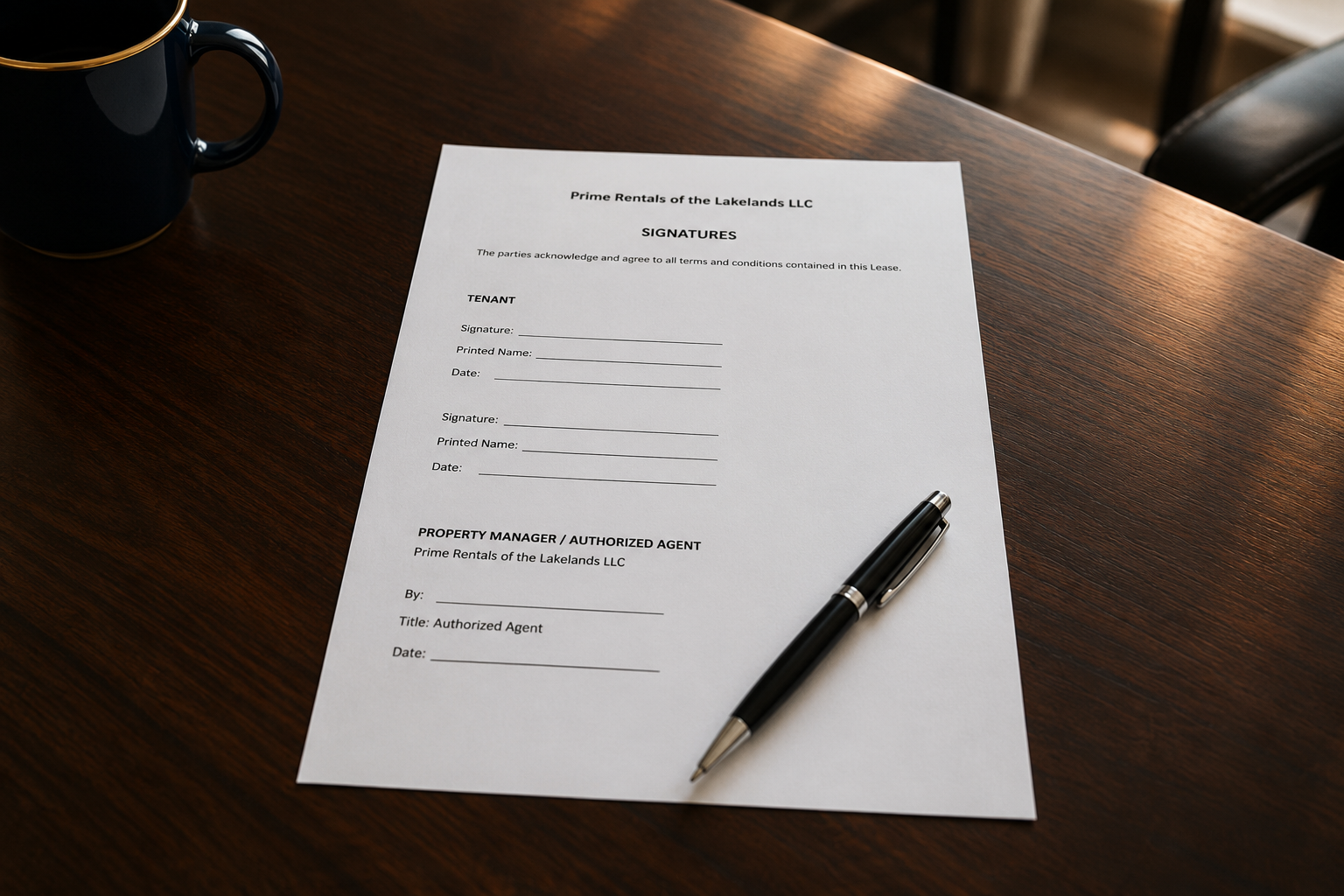
Before a tenant takes possession of a rental property, both parties should carefully review the lease to ensure every term is clearly understood. A thorough review provides an opportunity to answer questions, clarify expectations, and confirm that all property-specific policies, addenda, and disclosures have been incorporated into the final agreement. Taking the time to review the document together helps reduce misunderstandings and builds confidence before the tenancy begins.
Once both parties understand and accept the terms of the agreement, the lease should be signed before possession of the property is granted. Executing the lease establishes a clear record of the agreed-upon terms and confirms that both the property owner and tenant are entering the rental relationship with the same expectations.
A complete lease package often includes more than the lease agreement itself. Property-specific addenda, lead-based paint disclosures when applicable, HOA documents, move-in procedures, and other required forms should all be completed before the tenant receives keys. Organizing these documents in advance
Key Lease Signing Principles
● Review the complete lease before signing
● Answer questions and clarify expectations
● Ensure all required addenda and disclosures are included
● Obtain signatures before providing possession
● Keep complete signed copies for both parties
Preparing for Move-In
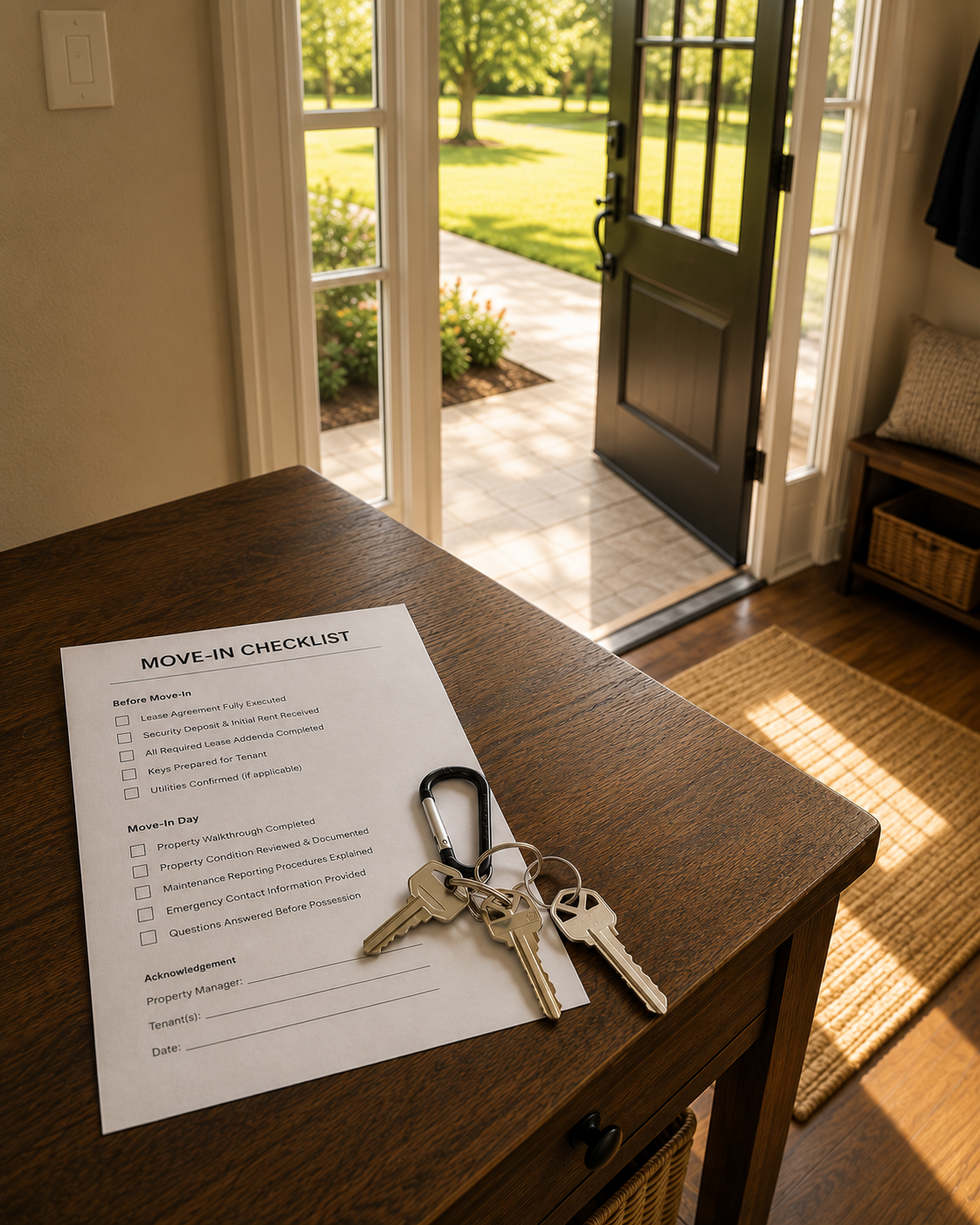
Once the lease has been signed, the focus shifts from documentation to preparing the property for a successful move-in. Before the tenant receives possession, both parties should confirm that all required paperwork has been completed, keys are ready, and any final inspections or property preparations have been finished. A well-organized move-in process helps create a positive first impression and establishes a professional relationship from the very beginning.
A move-in should include more than simply handing over keys. Many property managers conduct a move-in orientation, review important property information, explain maintenance reporting procedures, and document the property's condition with photographs or a written inspection report. Establishing these expectations before the tenant begins occupying the home helps prevent confusion and provides a clear record of the property's initial condition.
The move-in process represents the beginning of the landlord-tenant relationship rather than the end of the leasing process. Taking the time to prepare thoroughly helps protect both the property owner and the tenant while setting the foundation for a successful tenancy built on clear communication and mutual expectations.
Key Move-In Principles
● Confirm all lease documents have been completed
● Prepare keys and property access before move-in
● Complete a move-in inspection and document the property's condition
● Review maintenance reporting and important property information
● Start the tenancy with clear communication and expectations
A successful lease begins with clear expectations and a well-organized process. From preparing the agreement and documenting responsibilities to reviewing property policies and completing a thorough move-in, each step helps establish a stronger foundation for the tenancy ahead.
While every rental property is unique, approaching the leasing process with consistency and attention to detail helps reduce misunderstandings, protect everyone involved, and create a more positive experience from the very beginning. Taking the time to do things right before move-in often prevents far more significant problems later.