
South Carolina Resources
Understanding South Carolina's rental laws helps you make informed decisions with confidence.
The information on this page is provided for general educational purposes only and should not be considered legal advice. Rental laws can change over time, and every situation is unique. If you need legal advice regarding your specific circumstances, consult a qualified South Carolina attorney.
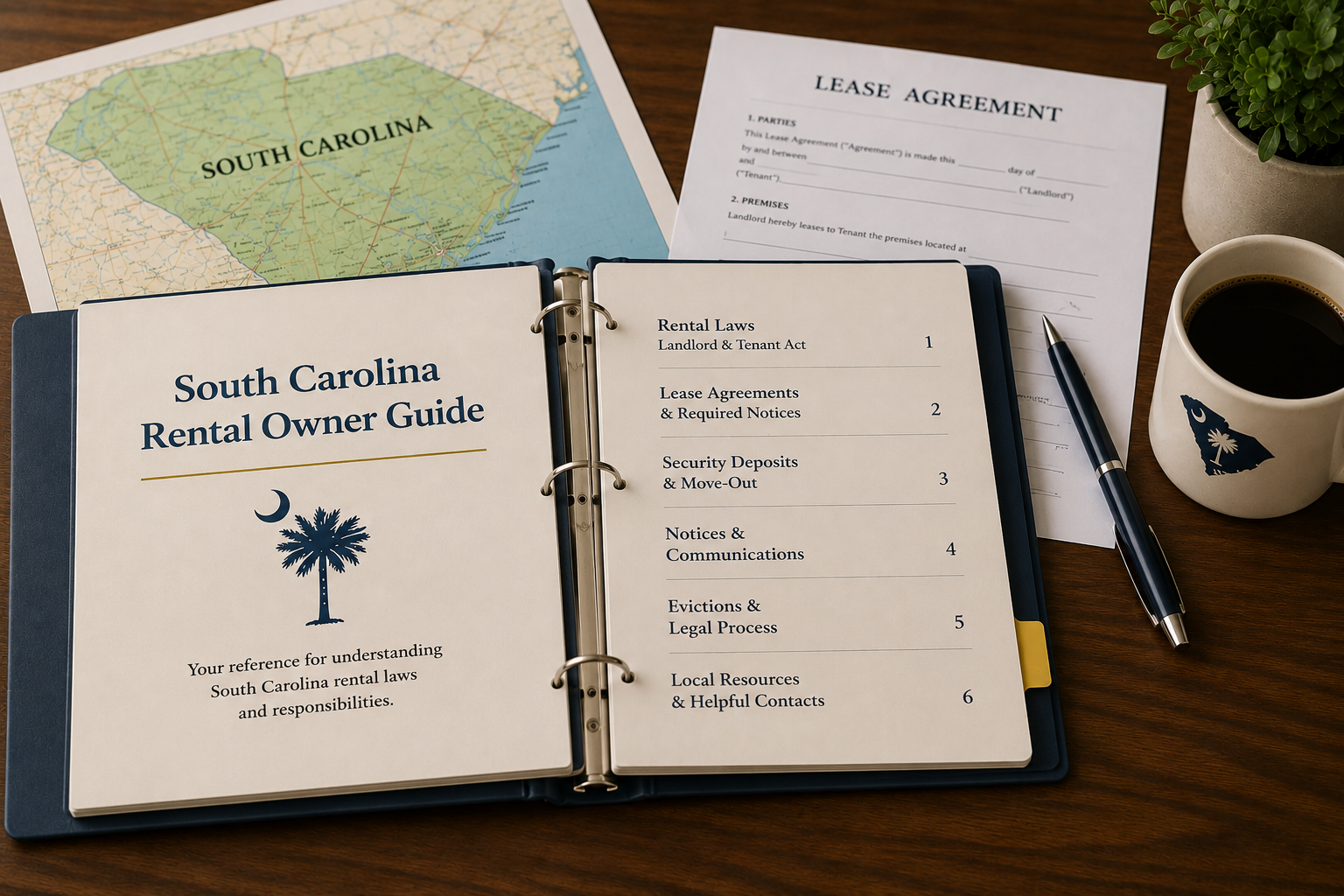
Understanding the South Carolina Residential Landlord and Tenant Act
The South Carolina Residential Landlord and Tenant Act establishes many of the rights and responsibilities that govern residential rental properties throughout the state. Understanding the general principles of this law can help rental property owners make more informed decisions, communicate more effectively with tenants, and develop consistent management practices. Becoming familiar with the Act also provides valuable context for topics such as lease agreements, security deposits, maintenance responsibilities, and the legal processes that may arise during a tenancy.
While every rental situation is unique, having a general understanding of South Carolina's landlord-tenant laws helps create a stronger foundation for successful rental ownership. This guide is intended to provide educational information about common topics affecting rental property owners and should not be considered legal advice. When legal questions arise or a situation involves specific facts or disputes, consulting a qualified South Carolina attorney is the most appropriate course of action.
Lease Agreements and Required Notices
A well-written lease agreement establishes clear expectations for both property owners and tenants while providing a framework for the tenancy. In South Carolina, lease agreements should clearly outline important terms such as rent, payment due dates, maintenance responsibilities, occupancy requirements, and other conditions that govern the rental relationship. Taking the time to create a thorough and understandable lease agreement can help reduce misunderstandings and promote consistent communication throughout the tenancy.
Certain situations may also require specific notices or written communication. Understanding when written notice is appropriate and maintaining organized documentation of important communications can help create a more professional rental experience while supporting consistent management practices. When questions arise regarding legal notice requirements or lease language, consulting a qualified South Carolina attorney is recommended.
Security Deposits and Move-Out Procedures
Security deposits play an important role in protecting rental property owners while providing tenants with a clear understanding of their financial responsibilities. Establishing documented move-in and move-out procedures, maintaining detailed inspection records, and keeping accurate records of property conditions can help minimize misunderstandings at the end of a tenancy. Clear expectations and thorough documentation benefit both owners and tenants throughout the leasing process.
Understanding South Carolina's general requirements regarding security deposits, property inspections, and deposit returns can help owners develop consistent procedures that support fair and professional property management. Maintaining organized records and communicating clearly throughout the move-out process helps create a smoother transition while protecting the interests of everyone involved.
Evictions and Legal Processes
While every rental property owner hopes to avoid legal disputes, understanding the general eviction process and other legal procedures can help you respond appropriately when challenges arise. Many situations can be resolved through proactive communication and consistent lease enforcement, but there may be circumstances where additional legal action becomes necessary. Familiarity with South Carolina's legal process helps owners understand what to expect while emphasizing the importance of following applicable laws and established procedures.
Because every legal situation is unique, eviction decisions should never be based solely on general educational information. When legal action becomes necessary or questions arise regarding your specific circumstances, seeking guidance from a qualified South Carolina attorney helps ensure you understand your rights, responsibilities, and available options.
Knowing When to Seek Professional Advice
Successful rental ownership involves knowing when professional guidance can help protect your investment. While educational resources provide valuable information and help owners better understand common landlord topics, there are situations where legal, financial, or tax professionals can provide advice tailored to your specific circumstances. Recognizing the limits of general guidance is an important part of making informed decisions and reducing unnecessary risk.
Whether you have questions about landlord-tenant law, lease language, accounting practices, or other specialized topics, seeking advice from qualified professionals can provide clarity when situations become more complex. Combining practical education with professional guidance when appropriate helps support confident decision-making and contributes to the long-term success of your rental property.
Key Landlord-Tenant Act Principles
● Understand South Carolina’s Residential Landlord and Tenant Act
● Recognize the legal rights and responsibilities of landlords and tenants
● Follow state requirements throughout the entire rental process
● Use South Carolina law to support fair and informed property management
● Seek qualified legal guidance when situations extend beyond routine management
Successfully navigating South Carolina's rental laws requires more than simply knowing the rules. Understanding your responsibilities, maintaining clear documentation, communicating consistently, and following established procedures all contribute to building a more successful rental experience. Taking the time to learn the fundamentals of South Carolina landlord-tenant law helps property owners make more informed decisions while protecting both their investment and their tenant relationships.
This guide was created to provide general educational information for South Carolina rental property owners and should not be considered legal advice. While understanding the law is an important part of successful rental ownership, every situation is unique. When legal questions arise or your circumstances require specific guidance, consulting a qualified South Carolina attorney is always the best course of action.